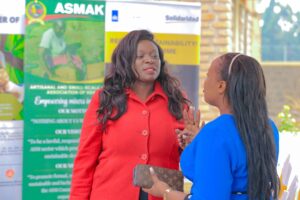
 Making Kenya’s Gold Sector “Bankable” was the theme at the Nyanza Gold Summit which recently marked a pivotal moment for the extractive industry in Western Kenya. It was a gathering defined by a singular, ambitious goal: making the Kenyan mining sector bankable. For too long, Kenya’s rich geological potential has been a “hidden” asset. The summit, hosted by Solidaridad East and Central Africa, The Impact Facility, and the Kenya Chamber of Mines, brought together a brilliant cohort of stakeholders committed to ensuring that our mineral wealth finally reflects on the national economy and, most importantly, on the lives of the people in the Nyanza belt.
 “Bankability” in mining is a multi-dimensional challenge. It requires more than just a high-grade reef; it requires standardized geological data, transparent ESG (Environmental, Social, and Governance) frameworks, and efficient recovery technologies. As a geologist, I see the immense value in our greenstone belts, but to unlock institutional investment, we must bridge the gap between “artisanal potential” and “industrial precision.” This means moving toward professionalized exploration and adopting GIS-led mapping that gives financiers the confidence to move capital into the sector.
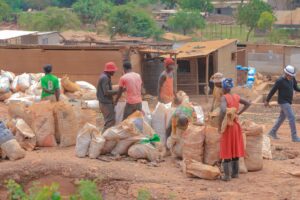
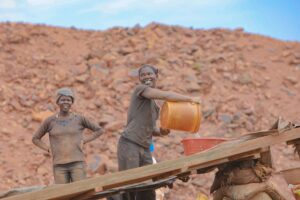
 A key highlight of the summit was the focus on the mercury-free transition and sustainable mineral processing. Organizations like The Impact Facility are leading the charge in proving that “Clean Gold” is not just an ethical choice but a financial one. By integrating gravity separation and modern concentrators, we can significantly increase recovery rates. When an artisanal site moves from 30% recovery to 70% or 80%, the project’s internal rate of return (IRR) shifts dramatically, making it a much more attractive proposition for the “Green Banking” institutions I’ve been studying with the IFC.
 The collaboration between the Kenya Chamber of Mines and international partners like Solidaridad signals a new era of “co-opetition.” We are seeing a shift where small-scale miners are being integrated into formal supply chains rather than being sidelined. This inclusivity is the bedrock of a bankable sector. When we formalize operations, we reduce the “risk premium” that banks usually associate with Kenyan mining. We aren’t just mining gold; we are mining trust and stability, which are the true currencies of global trade.
 As we look toward the 2025–2030 horizon, the roadmap for Nyanza is clear: Data-driven exploration and value addition. At Geol Gist, we are aligned with this vision by providing the high-performance tools from YT28 Rock Drills to Digital GIS surveys that allow miners to operate with the accuracy that banks demand. If we can prove the reserves and prove the ethics of the extraction, the investment will flow. We are moving away from speculative digging and toward calculated, scientific production.
In conclusion, I am incredibly grateful for the conversations sparked at the Nyanza Gold Summit. It reaffirmed that Kenya is ready to lead the region in sustainable, bankable mining. By combining our rich geological heritage with modern financial literacy and responsible technology, we are ensuring that the “Gold in Kenya” isn’t just a headline, but a catalyst for generational wealth. The work has just begun, and the future of the Nyanza gold belt has never looked brighter.
