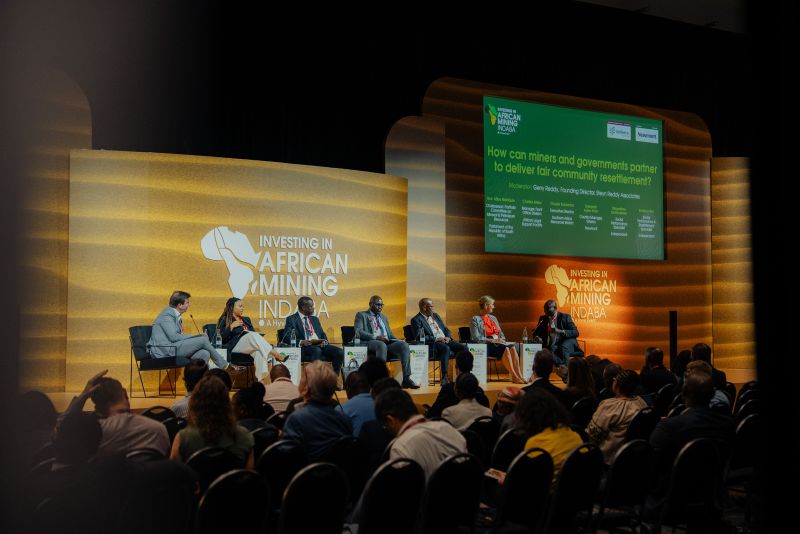
The global race for critical minerals has put Africa at the center of the world’s stage. From February 9th to 12th, 2026, the industry’s brightest minds converged at the Cape Town International Convention Centre (CTICC) for Mining Indaba 2026.

The global race for critical minerals has reached a strategic turning point, placing Africa at the center of the world’s transition toward electrification, artificial intelligence, and advanced defense systems. As highlighted in the Bloomberg Next Africa special at Mining Indaba 2026, the continent is rapidly moving away from being a passive exporter of “rocks” and toward becoming a vital partner in value addition. This shift is most evident in the Democratic Republic of Congo and Zambia, which dominate the global supply of cobalt and copper minerals now considered essential national security assets. For these nations, the definition of “critical” is evolving to focus not just on global demand, but on driving domestic industrialization, job creation, and a localized green energy transition.
Innovation and diversification are further defining this new era, with countries like Botswana aggressively moving beyond diamond dependency to explore copper, manganese, and silver. By launching state-owned exploration companies and leveraging AI-driven platforms like KoBold Metals, African governments are creating high-quality geological databases to attract “patient” long-term capital. Meanwhile, traditional sectors remain resilient, as seen in Ghana overtaking South Africa as the continent’s leading gold producer. This blend of new-age battery metals and enduring mineral wealth underscores the immense economic potential still waiting to be tapped across the continent’s diverse geological terrains.
The realization of this potential, however, depends heavily on overcoming longstanding logistical hurdles, sparking a geopolitical “railway race” between global powers. Projects like the US-backed Lobito Corridor in the west and the China-funded refurbishment of the TAZARA railway in the east are turning African infrastructure into a strategic asset. While these projects represent a power play for mineral access, African leaders are positioning them as complementary networks that could form a transcontinental corridor benefiting not only mining but also regional agriculture and trade.

Ultimately, the goal is to unlock the estimated $29.5 trillion in mine-site mineral value held within the continent, of which over $8 trillion remains undeveloped. Success will require a coordinated policy shift and a focus on infrastructure investment, which currently yields impressive returns of 8–13%. By prioritizing domestic processing and subsurface intelligence, Africa is positioned to capture the full value of its resources, ensuring that the next chapter of the global mineral race is one that powers both international innovation and local prosperity.
